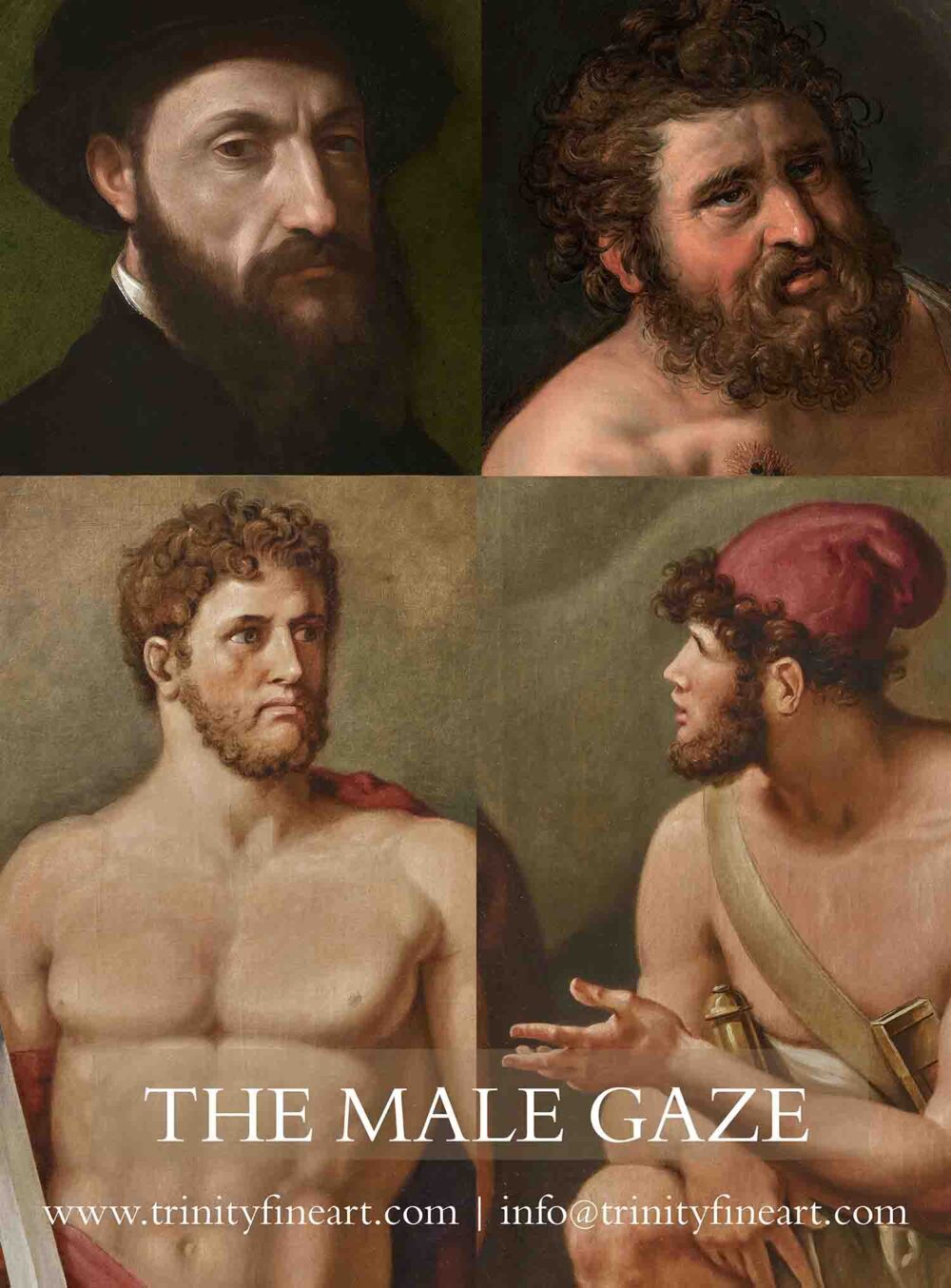




The Male Gaze
15 Old Bond Street
London
This Autumn, Trinity Fine Art is delighted to present a new exhibition
The Male Gaze: The Eyes are the Window to the Story
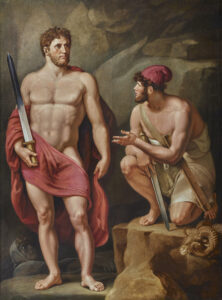
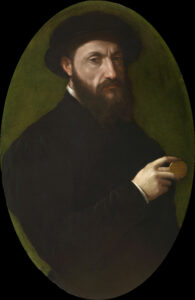
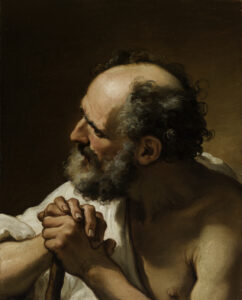
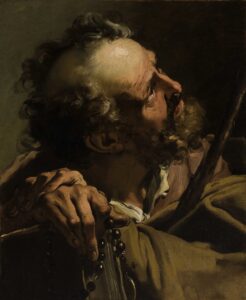
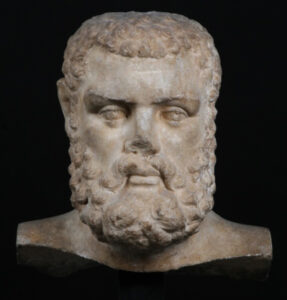
What can eyes tell us about a person? They are often said to be the window to the soul, but when the eyes in question are painted, perhaps it would be more accurate to say that they are the window to the story. In understanding the gaze of a figure portrayed, whether real or fictional, it is possible to read further into what the artist, commissioner or sitter wanted to convey. The onlooker often asks themselves who was this person? what was he like? what was happening in his life when this likeness was painted? Sometimes these questions are of the utmost importance, and they are ones that were sought to be answered in the decisions made by those involved in the creation of the work. Other times, it is less about the figures themselves, and more about what they represent. In either case, some of these answers are to be found in the eyes.
The rise in interest in pushing female artists to the forefront of contemporary art history has also led to a deepening focus on the reception of art by women viewers. One now reads often about the difference in literary characters explicitly created ‘for the female gaze’ rather than those intended ‘for the male gaze’. For example, the 2024 exhibition at the Tate Britain dedicated to women artists was titled Now You See Us, markedly drawing focus to the eyes and viewership as well as visibility for the artists. Such exhibitions and events focus on women artists being seen by an audience. It is the eyes of the onlooker and their perception which is important, with the female artist being the focal point of attention.
Bringing together European Old Master paintings from across four centuries, as well as an ancient Roman sculpture, this exhibition turns that trend on its head, not only focussing on men, but also specifically on the figure portrayed, not the artist or the viewer. When standing in front of these works, it is not only our eyes that are working to interpret what we see. The eyes of the characters are telling us what we are supposed to understand.